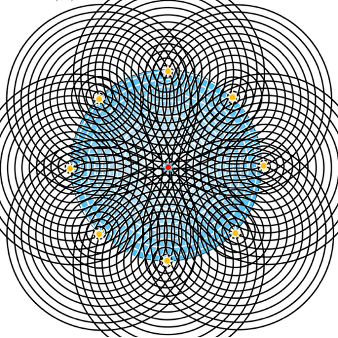
Analogies are easily stretched beyond viability, but they are the stuff of intuition.
Consider a barrel filled with water and a rock on a string dangling over it. If the rock is dropped to just submerge beneath the surface there will be ripples emanating toward the rim of the barrel. Now consider that the rock, just below the surface, is yanked out. This too creates ripples that have similarities and differences from the former. Crests forced to have the same wavelength, would be out of phase with respect to the other situation.
Now consider an expanse of hydrogenous plasma at a temperature conducive to an ebb and flow of ionized and neutral hydrogen. Picture this as a sea of protons with a haze of free electrons dangling on strings either just above or just below the surface. When an electron dips beneath the surface ripples cascade outward from the proton to which it is bound. Similarly consider an electron that escapes its entanglements, proceeding out of the surface. That’s the ‘particulate view’ of the situation.
We know the capture of an electron will result in the release of a photon of radiation of a specific energy related to the binding energy of the electron. Similarly we know that absorption of that radiation will release the electron. That’s the ‘radiation view’ of the situation.
Following the water barrel analogy and particulate view, there are two wave functions, not one. In temperature equilibrium there will be the same number of electrons diving in as the number being expelled. When an electron (or a photon for that matter) is expelled, it leaves a place for another, signaled by its ‘negative’ wave function. It is retarded or advance depending on the view we take. There is, perhaps, an E and B field waving in the one case, and D and H in the other. They must match up to produce an eventual energy transfer.
Perhaps the closest separation of protons c t determines the pairing, waves proceeding until a match is found. And then the outward procession becomes of no effect.
Is there something we can do with this?
The barrel analogy suggests something subtle but persistent: energy exchange is not a one-sided event. Emission and absorption appear as complementary boundary conditions on a shared process, not independent acts. Then a single wavefunction describing radiation would seem to be incomplete. A second, complementary wave—whether interpreted as advanced, retarded, or simply as a constraint imposed by available absorbers—is required to complete the transaction. In such a picture, much of what we call “radiation” is unrealized structure: a field of possibilities that becomes physical only when matching conditions are met. The extent to which this view can be formalized is unclear, but it offers a way to reconcile conservation, thermalization, and the observed discreteness of energy exchange without invoking free-standing photons divorced from their endpoints.
Leave a Reply