My roles in every production I’ve ever been associated with have been quite minor. And, yeah, I know. That’s what they all say when the shit hits the fan.
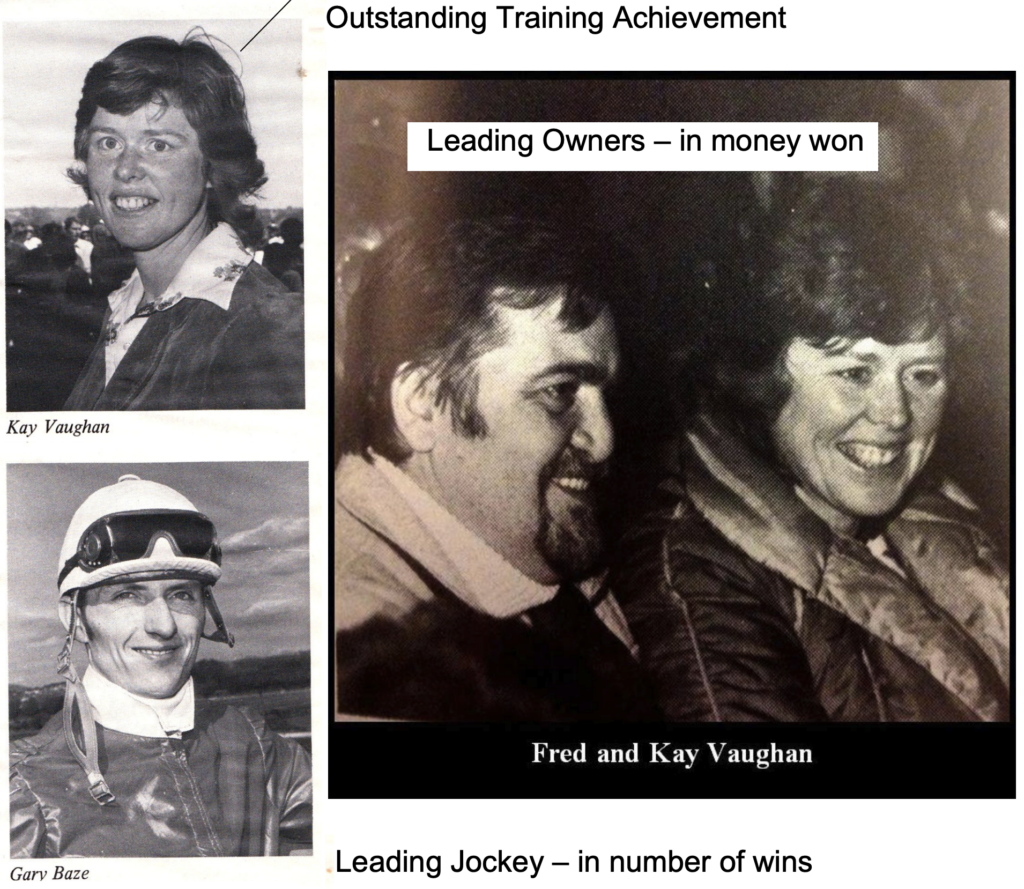
The two organizations I’ve been associated with experienced lulls in the early and mid-seventies, but by the end of the seventies and early eighties they were thriving. Kay Vaughan Racing Stables survived our early mistakes and would by the early eighties become the leading money earning racehorse ownership at Longacres three years in a row. Meanwhile the Lazy B (as I called my day job employer, the Boeing Aerospace Company) was once again on its feet having survived the major downturn of the early seventies. It was once again hiring college graduates.
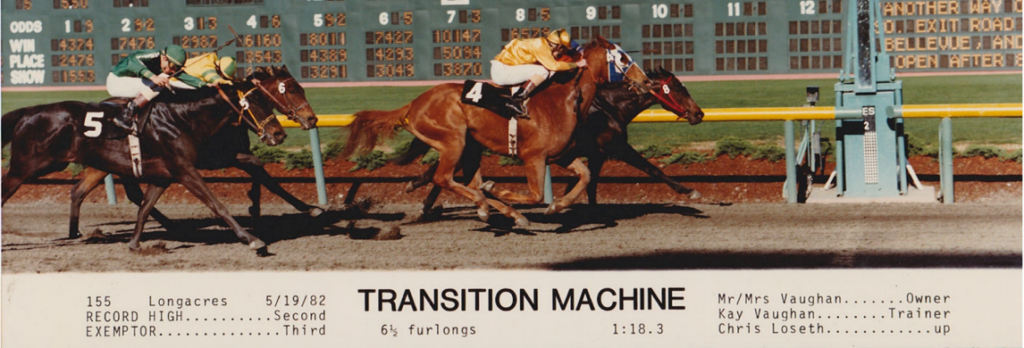
I’ve been a bad boy on more occasions than I like to remember, but almost always of very little consequence other than some embarrassment. The furthest I’ve ever gotten out of my lane was with what was probably my greatest achievement – the invention of the Transition Machine. It was potentially a major fault tolerant, inexpensive, parallel supercomputer constructed from the first-generation microprocessors. It gained me a degree of notoriety at a company that had not envisioned itself as a computer manufacturer. This occurred during this same time frame of the late seventies and early eighties. And Yes, I named a horse Transition Machine, who was a big lummox of a colt who had been very difficult to train but had finally managed to win two successive sixteen thousand dollar claiming races, being claimed out of the last of the two. Yes, I suppose he had been aptly named.
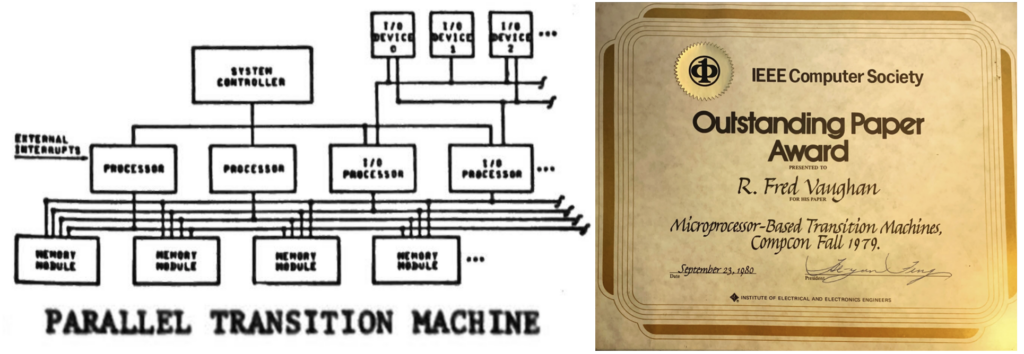
I’m sure I was quite annoying to my Boeing Aerospace management with whom I had become known as the “independent contributor”. The subtlety of the phrasing did not escape me; it was clearly designed to combine flattery and contempt for my not being a team player. I peddled my invention to various organizations within the company and changed organizations to those who promised research money to further the invention’s production. Several years’ worth of funding had resulted in a prototype system that was impressive and a software compiler that allowed the conversion of application programs of the day into the parallel structure that ran on the machine. I and a recent college graduate assigned to work with me contributed many technical papers published in proceedings and journals, one winning the Outstanding Paper Award of the IEEE Computer Society. There were also three extensive methodology patents that were each allowed in 51 countries.
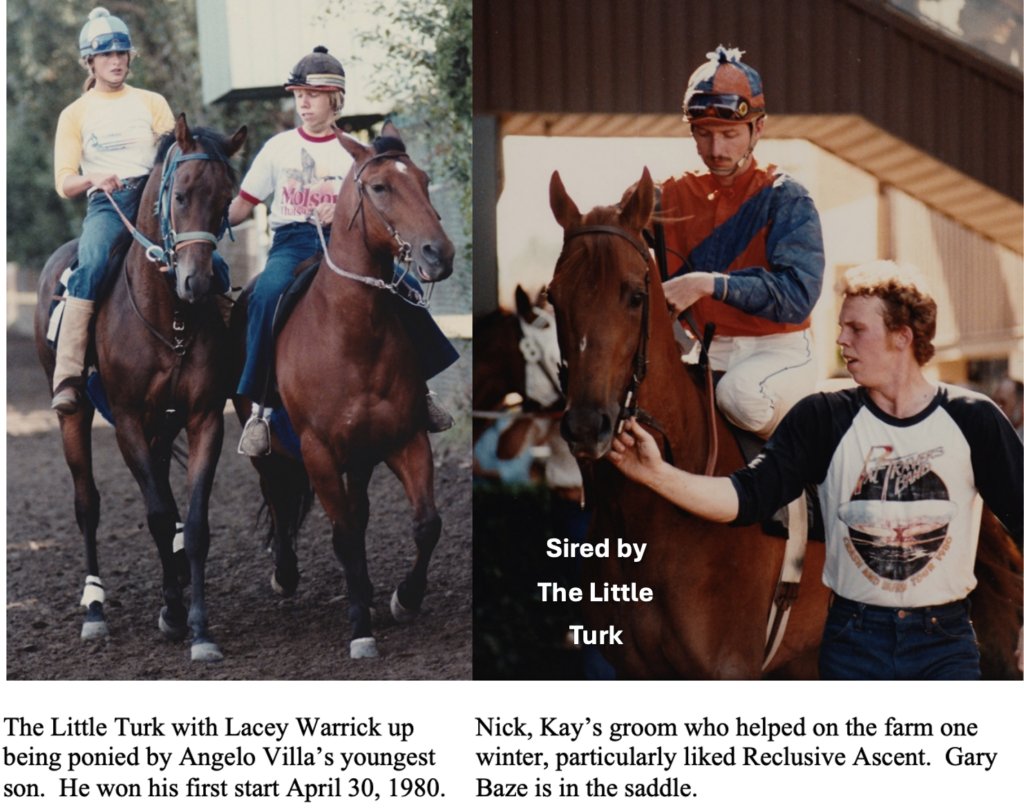
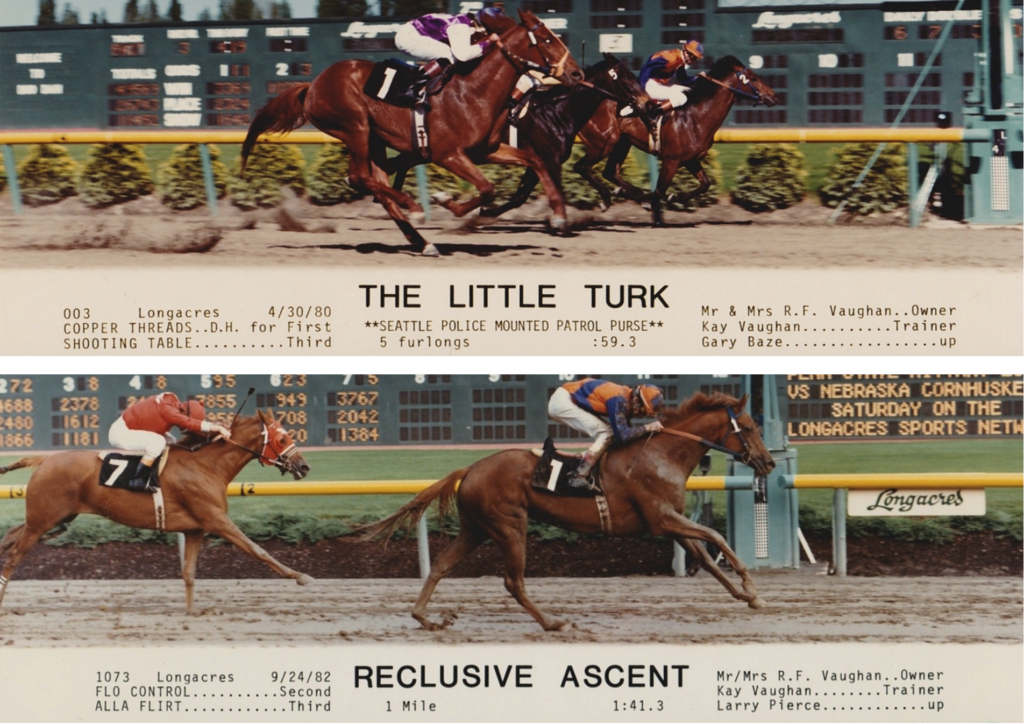
My second level manager who had been promoted beyond his capabilities scheduled me to come to his office on a regular basis to explain computer technology to him. A colleague of mine often referred to him as ‘the little Turk’ for several obvious reasons. And yes, I did name a horse after him who as a yearling would somehow manage to clandestinely breed our foundation mare who still had the weanling who would be named Transition Machine at her side. The Little Turk (horse) was beautiful, unlike his namesake. His offspring, a filly named Reclusive Ascent (half sister to Transition Machine), was even more beautiful; both were quality racehorses.
As my success (or perhaps just notoriety) grew in his organization, the head of the tech staff asked me to document all the research contracts I had been associated with in his organization. Unsuspecting, I provided the list. I did not know why he wanted it or that I would be asked to make a presentation to Oliver Boileau, the president of the Boeing Aerospace Company, on the Transition Machine the very next day. That was 1980.
As I entered the president’s conference room, I noticed that ‘the little Turk’ and Stampalia, the head of tech staff were sitting there. The room was otherwise full of the presidents and vice presidents of subsidiary companies including Mark Miller, president and general manager of Space and Information Systems, the president of Boeing Associated Products with whose organization I would later deal, and Aerospace New Business Vice President, Perry Sikes to whom I would report very soon. It goes without saying that there was much excitement in the room when I finished, with Boileau asking whether Boeing Aerospace should diversify into computer manufacturing.
It was going extremely well until Stampalia interrupted the proceeding with a loud derogatory comment, “We’ve spent over one and a half million dollars on this machine and we’ve got nothing!” He had misconstrued the data on all the projects I had been associated with for tech staff in the past, most of which had nothing to do with Transition Machines, and we did have an eight-processor prototype.
I was pissed, and yelled out, “That’s a lie!”[1]* Whoops!
That sort of unraveled the meeting. The very next morning, my immediate boss showed up to inform my young partner that he had been assigned to the AWACCS project and was to report immediately. As for me… well, I was assigned to a different project (I can’t even remember what the name of it was), to which I reported immediately only to find out that they did not have room for another desk, but not to worry, they placed a desk in a broom closet just for me. No shit! A private office the width of a desk with a chair in front of it. The tiny room hadn’t been sealed; the studs were all exposed with wires and wiring boxes between the studs. The lead to whom I had been assigned was embarrassed, saying he had no idea why I was being situated in a closet. But I knew.
I proceeded to read up on the project and what had to be done, but before the day was over, he knocked on my door to tell me that I had a phone call on his phone; I was not given a phone.
It was Perry Sikes, the vice president of new business. I was to report to him the next day.
To be continued.
__________________________________
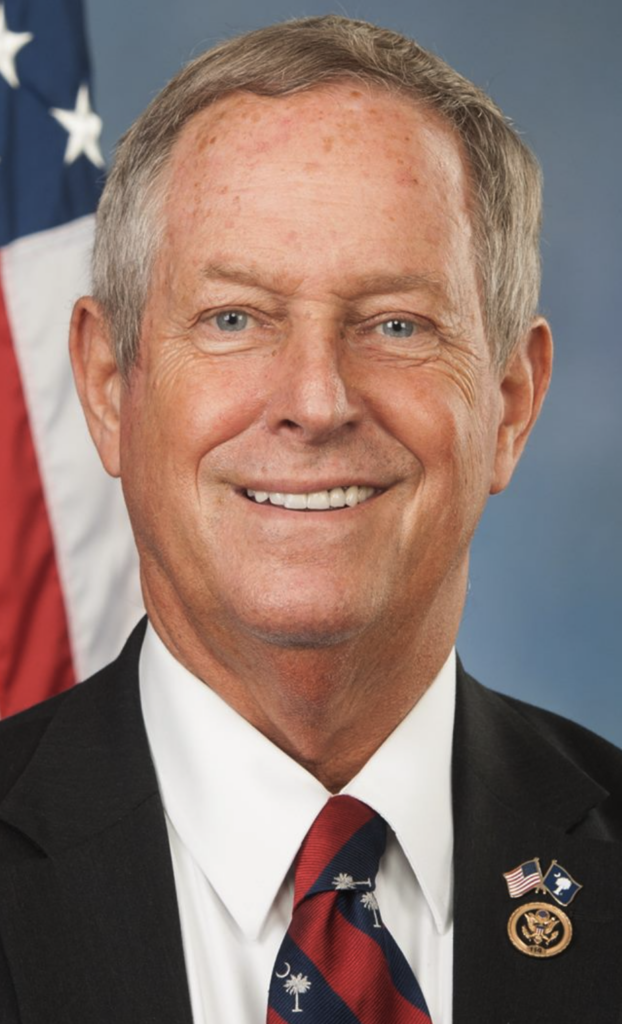
- You may all recall that Republican Representative Joe Wilson of South Carolina famously shouted, “You lie!” during President Barack Obama’s State of the Union address to a joint session of Congress in 2009. It was a rare breach of protocol. I thought he was an asshole, but I sort of understood and felt sorry for him in his moment of fame and shame.
Leave a Reply