There are no options in selecting the gravitational space variance am in determining the quark performance characteristics. The most reasonable approach to combining the properties of the charge and mass of an indivisible particle would be to assume that the total potential energy at the origin (the center of what are both presumed to be the same Poisson distribution types) is zero as a boundary constraint, such that:

In which case the variance parameter of the gravitational mass distribution becomes:
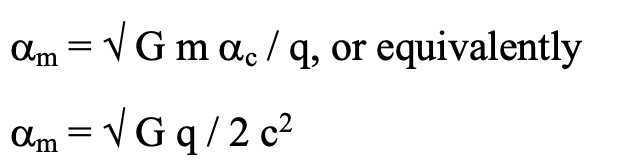
Thus, there are two alternative expressions, depending on whether we choose to substitute into the formula the rest mass value determined by the electrostatic self-energy formula or just use the electric charge potential. They are equal because the following relationship results from zero potential at the origin:

The following plot of potential assumes ac = 7.66 x 10⁻¹⁷ cm as characterizing a symmetric proton-like particle with a positive unit electronic charge from which we obtain for the mass variation parameter:

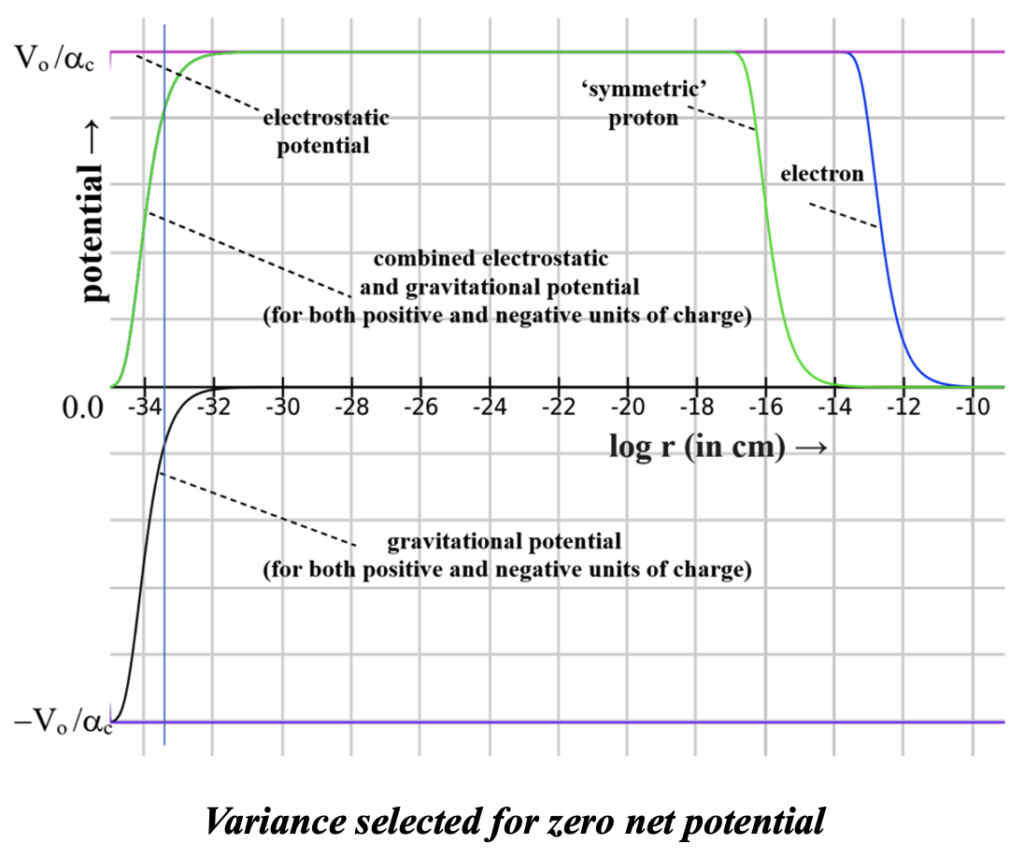
If, on the other hand, we had used the symmetric electron parameters we would have obtained the very same value for the variance:

That is because the rest mass m in combination with its unique variation parameter am, is completely determined by the magnitude of the charge of a particle.
The constraint formula for am involves only three universal constants G, e, and c. The resulting mass distribution parameter is an incredibly short distance, but it is on the order of the ‘Planck distance’ rp which is commonly referred to as the ‘smallest measurement of length with any meaning’. That distance is approximately 1.62 x 10⁻³³ cm. There is a combination of universal constants that is equal to this distance, in particular:
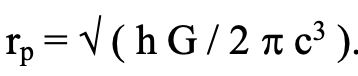
So the width of the gravitational well involves just three universal constants as well, albeit it includes e instead of h. Both the formulas for the Planck minimal distance are based on energy considerations, which is also how we arrived at am. Plotting the absolute values of the forces on log scales is illustrated in the next figure.
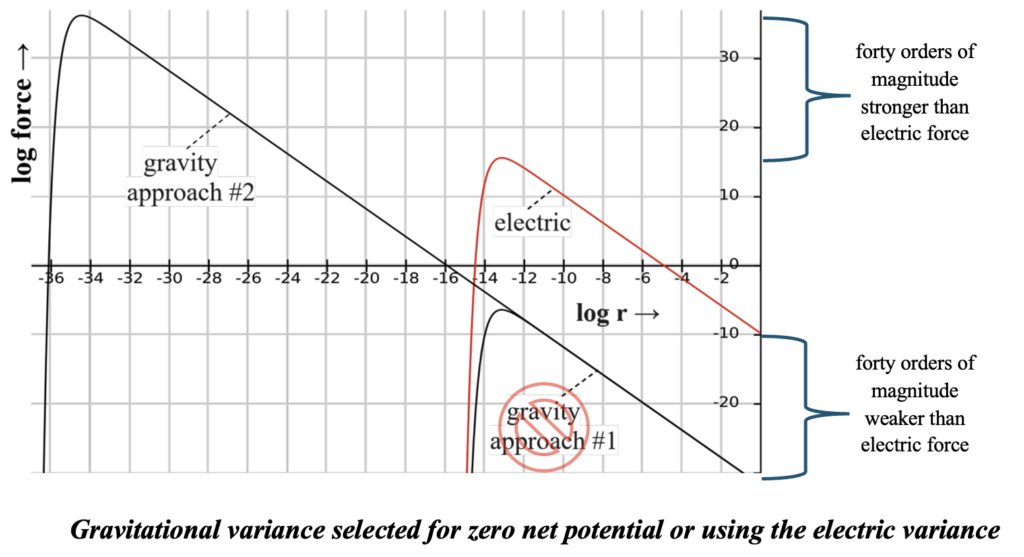
So, one might ask, of what use is this in determining quark interaction behavior. It limits the binding force such that they do not collapse into a new entity; they remain two interconnected particles. Each is capable of further interaction.
But where is the cross-over where the net changes sign?
∣Felec∣ = ∣Fgrav∣
For two interacting down quarks, this is:
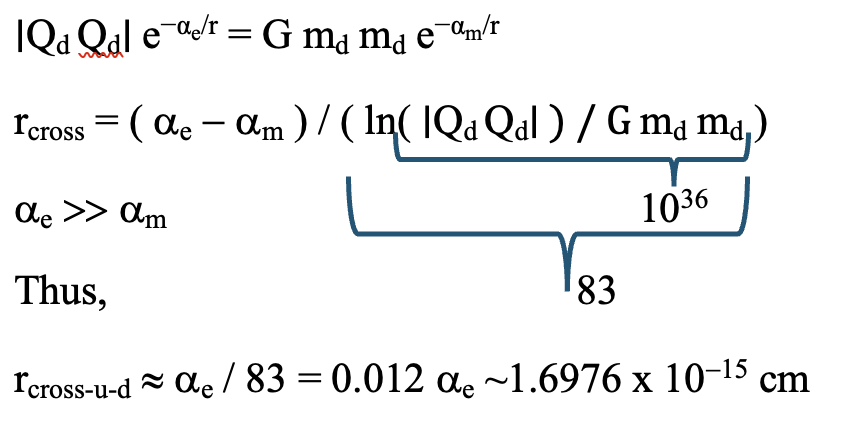
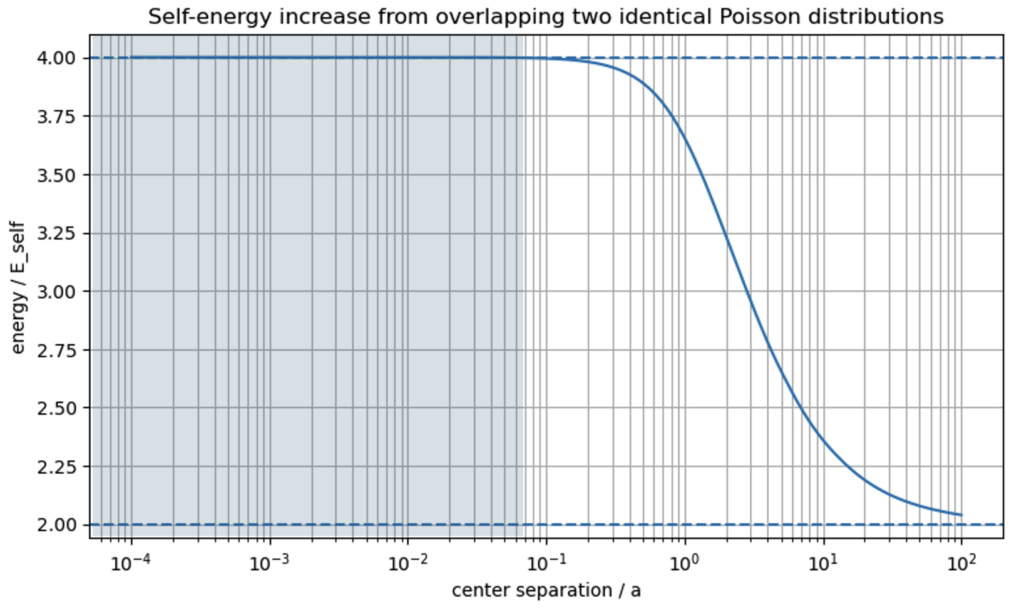
At smaller separation (see shaded area in the plot below) the gravitational attractive force becomes greater than the electric repulsive force, ultimately forcing them to strongly adhere.
Leave a Reply