The direct association of electrostatic and gravitational charge densities and potentials resulted from solutions to the Poisson equation. Setting a boundary condition at the center of resulting distributions and associating mass with the self-energy of the electrostatic aspect of the solution made that possible.
The separate electrostatic solutions were subject to fragmentation into lower energy distributions with the same scale factor but lower energy with the same total amount of electronic charge:
Q –> Q / N
E –> E / N2
In this situation fragmentation would seem to be favored, that would lead ultimately to a uniform distribution of charge.
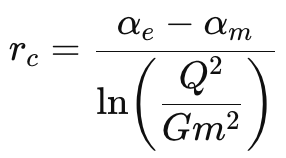
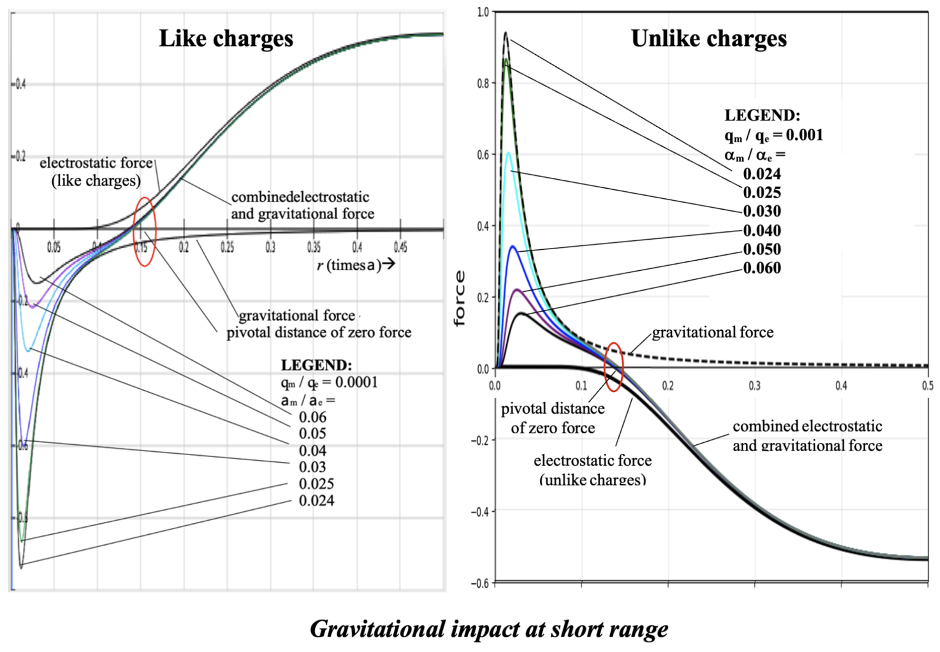
However, with the gravitational aspect distribution tied directly to the same quark identity an additional phenomenon enters the picture. Although negligible at macroscopic scales, the associated short-range sector becomes dominant near the origin because of the distinct Poisson scale factor. At close separation the gravitational aspect precludes electrostatic fragmentation. What might otherwise be fragmented distributions are now locked together once the magnitude of the central gravitational field strength exceeds the electrostatic field strength at what we call ‘cross over’. For distribution of the same sign, this separation distance is:
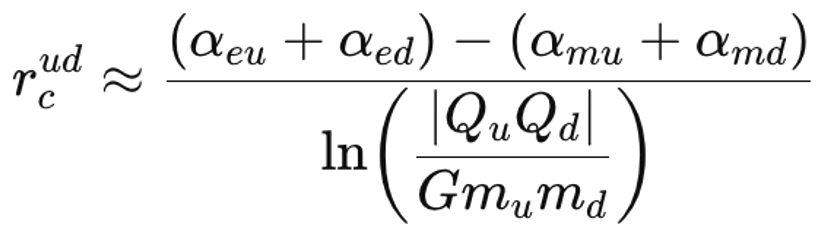
A somewhat similar but opposite effect affects the interaction of two electrostatic distributions of unlike sign. In this case total collapse and singularity are precluded by a positive ‘gravitational’ force once cross over has been penetrated, locking the two distributions into a minimally separated embrace.
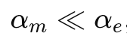
For the situation in which the electrostatic and gravitational scales are vastly different with
The approximations for the cross over separation expressions become much simpler:
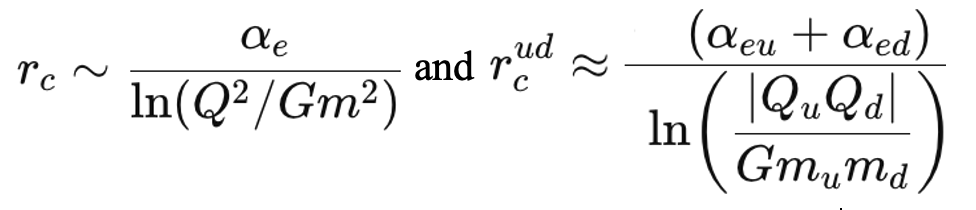
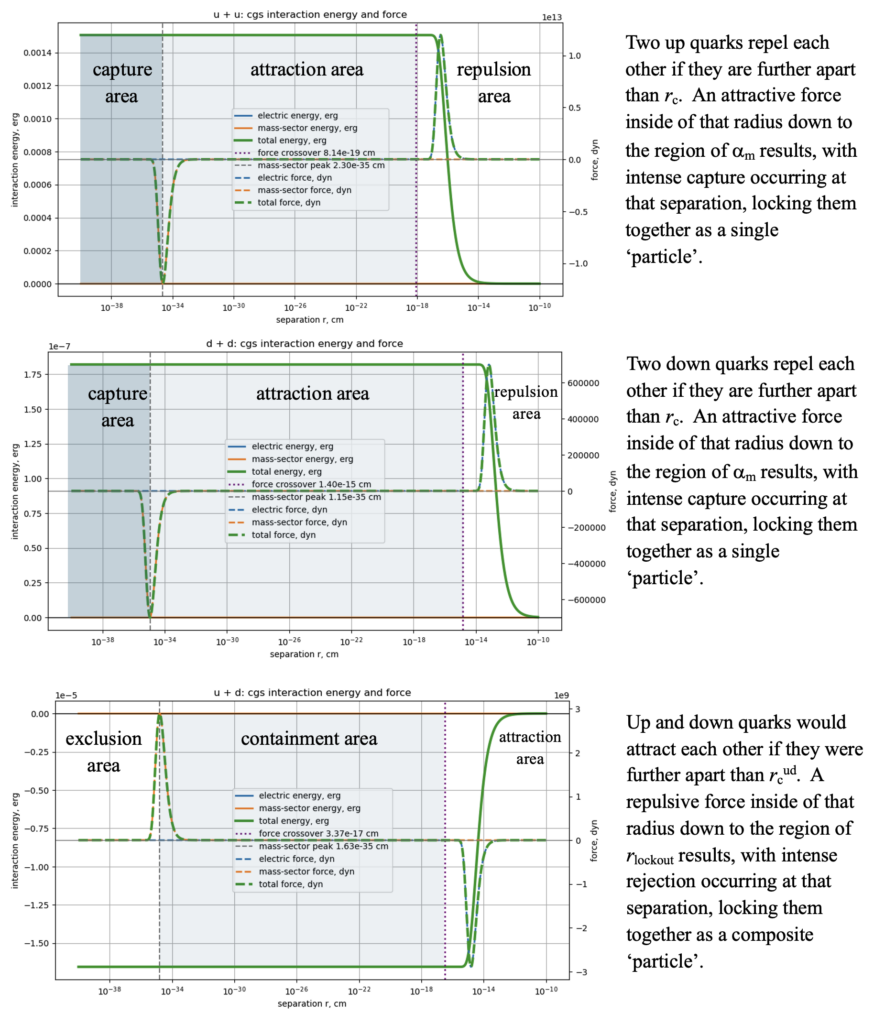
The resulting composite structure will be contained within the bounds of rcud and rc.
These effects are shown schematically in the figure below, with am parameters that are orders of magnitude greater than realized with realistic charge and mass characteristics of up and down quarks.
Program determinations of the quark interactions we obtained are shown in the following plots:
Leave a Reply